
For Our Customers
Consumer Info
Everything you need as an OEDC customer — connections, billing, payments, safety, and savings tips.
Consumer Services
New Connection
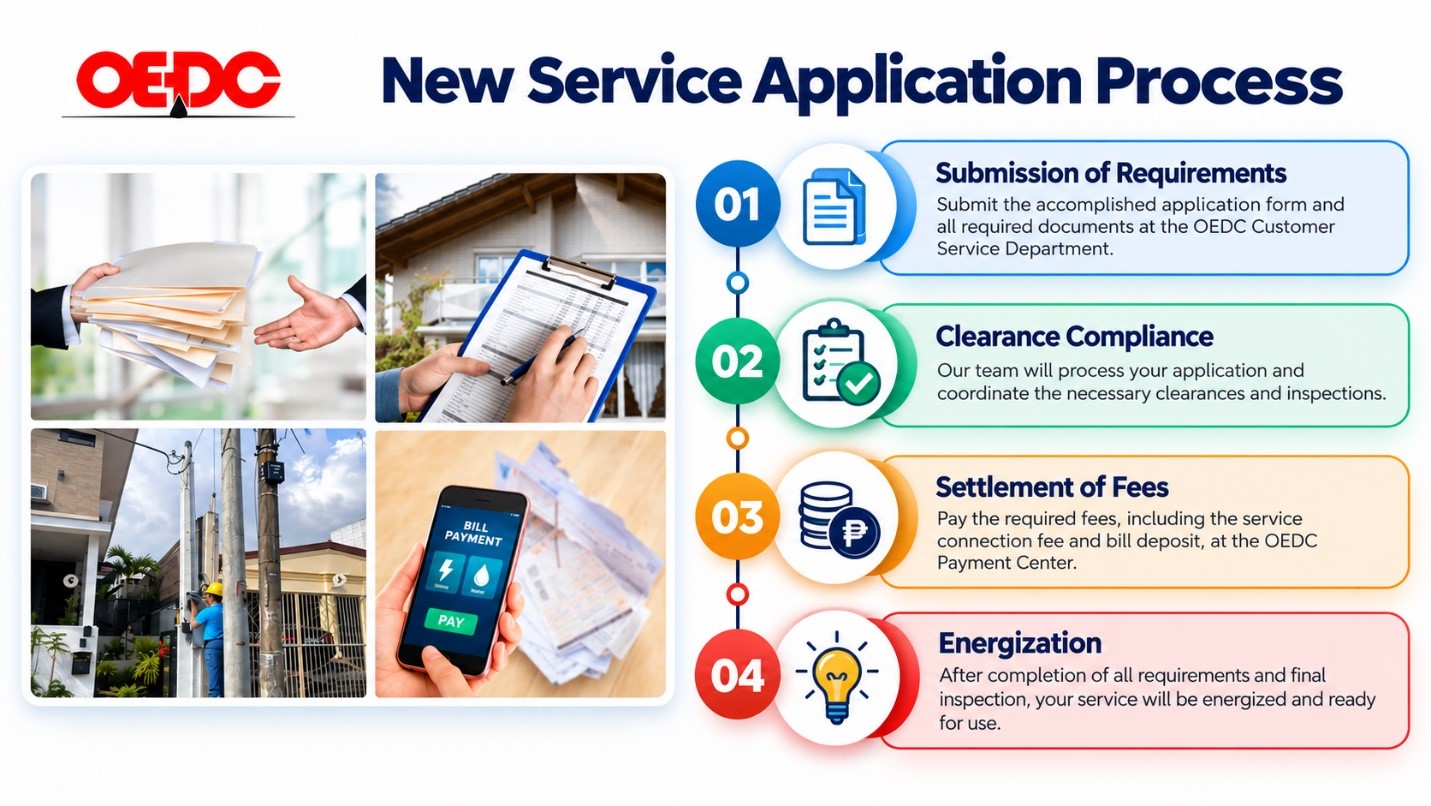
Requirements — Residential Electricity Application
- Certification of Final Inspection (CFEI)
- Application Form/Customer Information Sheet — requested from the Customer Services Department
- Affidavit to Attest Ownership of Premises or Undertaking Form — requested from the Customer Services Department (duly notarized)
- Birth Certificate – if single (photocopy) or Marriage Certificate if married (photocopy)
- Valid I.D. (photocopy)
- Proof of ownership (Tax Declaration, Land Title, Deed of Sale, Occupancy Permit)
- Detailed Sketch — location of the application for service connection
- Nearest Meter Number — adjacent meter of the application for service connection
- Special Power of Attorney — for Authorized Representatives (photocopy)
- Private Electrician — for the installation of the standard metering facility
- BIR Form 2305
Additional Requirements for General Service or Power Applicants (Commercial, Industrial, Government and Other Institutional Entity)
If Single Proprietorship
- Business Permit (photocopy)
- If Lessee: Contract of Lease or Authorization Letter from the Owner showing the right to occupy the premises sought to be energized (photocopy)
- Valid I.D. of the Building Owner (photocopy)
- Bureau of Internal Revenue Registration Form No. 0605 (photocopy) – Requirement for E-VAT law
- Special Power of Attorney (SPA) – Authorized Signatory; Present Original Valid I.D. of Authorized Signatory and submit one (1) photocopy
If Partnership
- Business Permit (photocopy)
- If Lessee: Contract of Lease or Authorization Letter from the Owner (photocopy)
- Valid I.D. of the Building Owner (photocopy)
- BIR Form No. 0605 (photocopy) – E-VAT law
- Special Power of Attorney (SPA) – Authorized Signatory; Present Original Valid I.D. and submit one (1) photocopy
If Corporation
- SEC Registration and Articles of Incorporation (photocopy)
- If Lessee: Contract of Lease or Authorization Letter from the Owner (photocopy)
- Valid I.D. of the Building Owner (photocopy)
- Board Resolution authorizing signatory to sign in behalf of the Corporation
- Special Power of Attorney; Present Original Valid I.D. of Authorized Signatory and submit one (1) photocopy
- BIR Form No. 0605 (photocopy) – E-VAT law
If Government
- Appointment Letter of Authorized Signatory
- Present Original Valid I.D. of Authorized Signatory and submit one (1) photocopy
- If Lessee: Contract of Lease or Authorization Letter from the Owner (photocopy)
- Valid I.D. of the Building Owner (photocopy)
- BIR Form No. 2303 / Annual Payment Form 0605 (photocopy) – E-VAT law
Valid Identification Cards
Driver’s license · Passport · PRC license · Original NBI Clearance · Senior Citizens ID · SSS ID · GSIS ID · Postal ID · Company ID · Voter’s ID
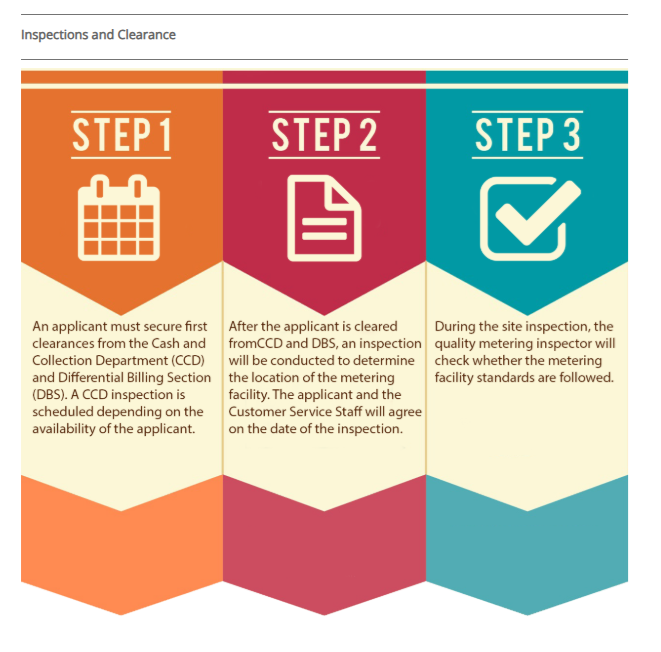
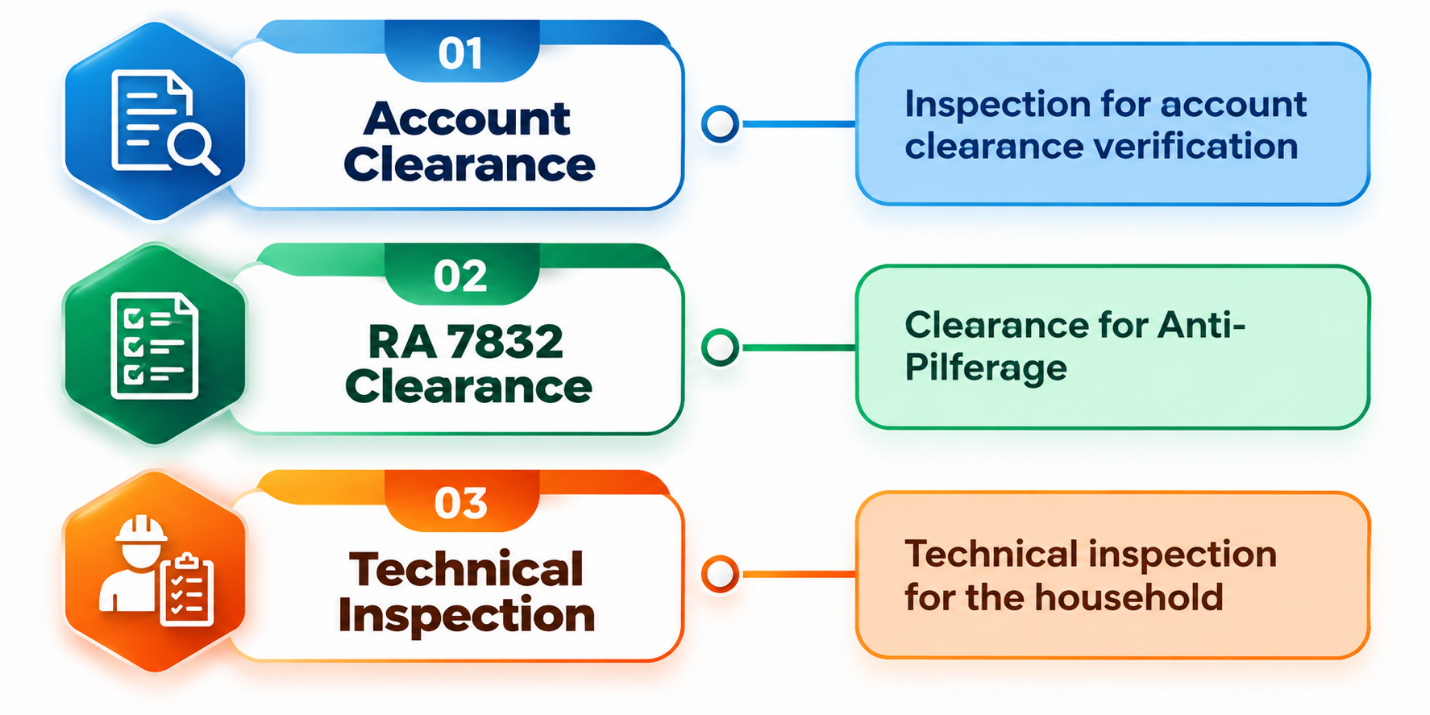
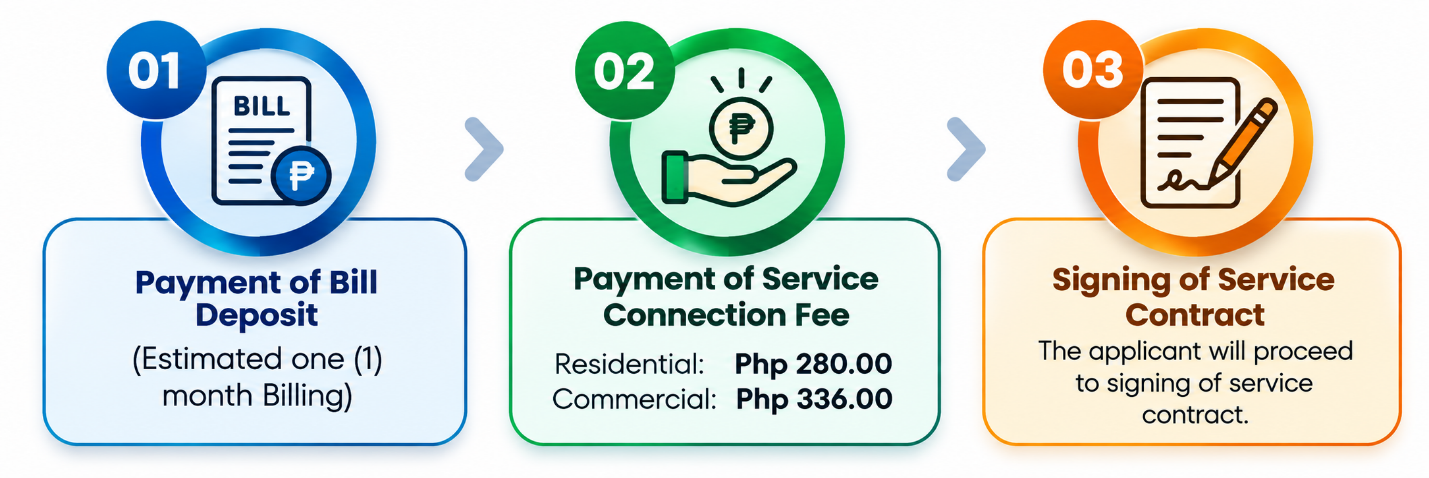
Inspections and Clearance
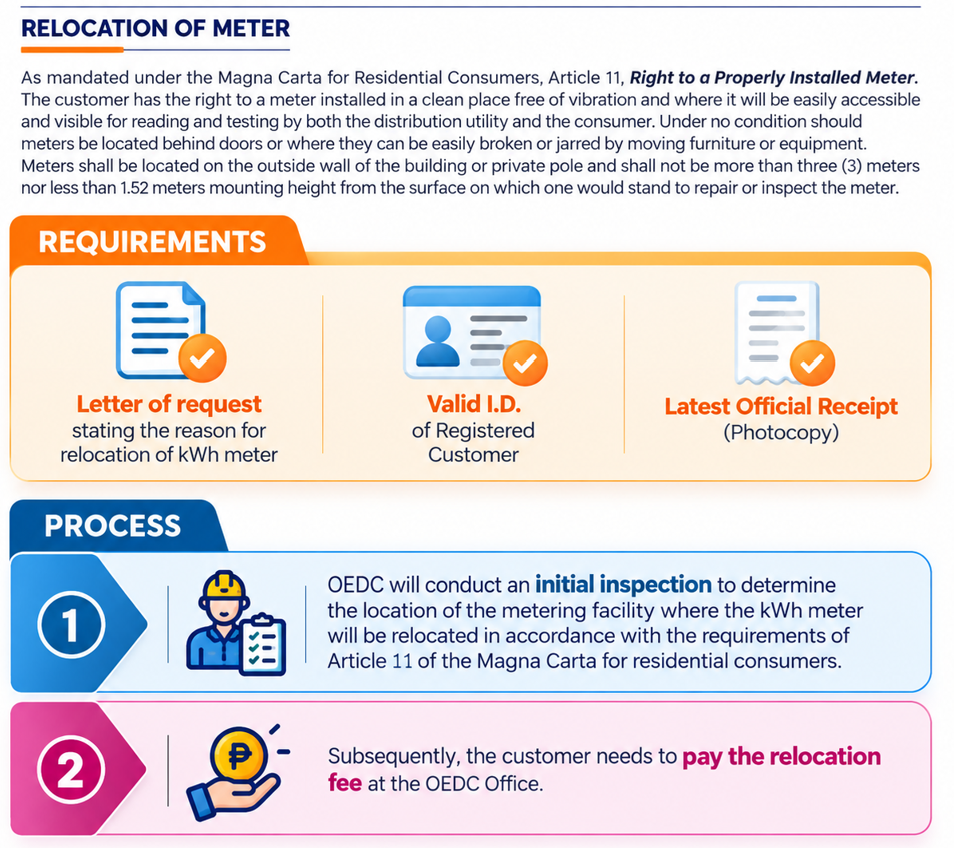
Relocation of Meter
As mandated under the Magna Carta for Residential Consumers, Article 11. Right to a Properly Installed Meter. The customer has the right to a meter installed in a clean place free of vibration and where it will be easily accessible and visible for reading and testing by both the distribution utility and the consumer. Under no condition should meters be located behind doors or where they can be easily broken or jarred by moving furniture or equipment. Meters shall be located on the outside wall of the building or private pole and shall not be more than three (3) meters not less than 1.52 meters mounting height from the surface on which one would stand to repair or inspect the meter.
Consumer Services
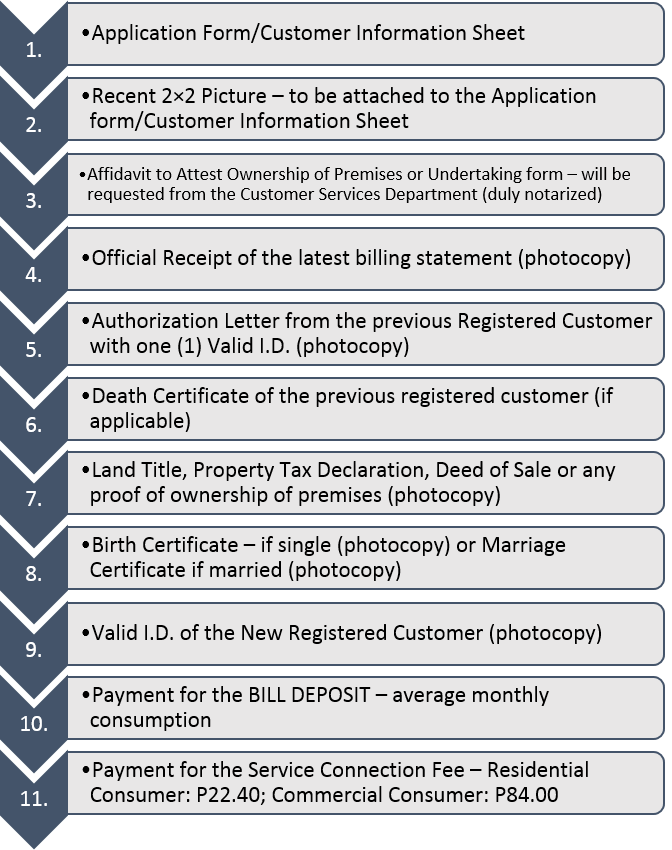
Change of Account Name
Requirements for Change of Account Name and procedure for other processes of CAS/SAS are available at the OEDC Customer Assistance/Service Application Section. Present valid IDs, proof of ownership or transfer of the premises, and the completed Change of Account form.
Consumer Services
Reconnection
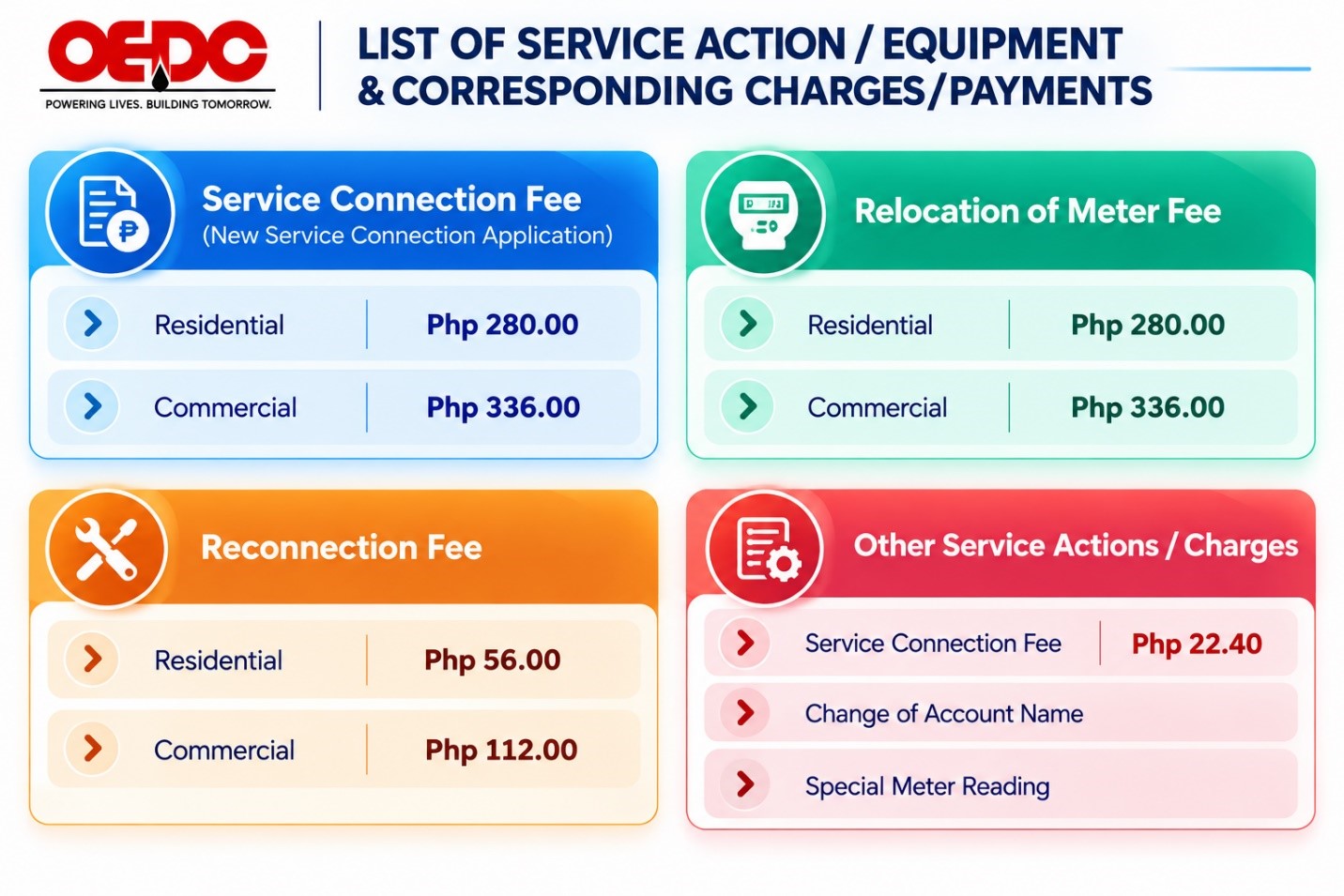
Reconnection and Reinstallation — Customers must pay the full bill amount and the reconnection fee.
Reconnection and Reinstallation Fee:
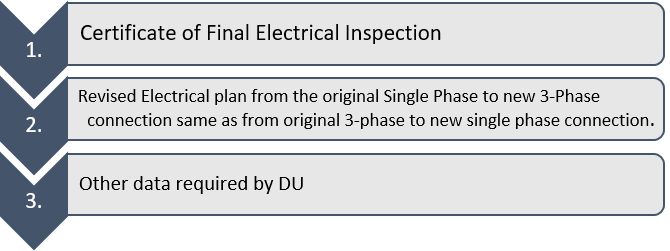
Note: Request for upgrade of account from single phase to 3-phase or from 3-phase to single phase has separate requirements.
Per Magna Carta Article 23 — the utility must reconnect within the Compliance Plan period, but in no case exceed twenty-four (24) hours from payment of arrearages by the customer.
Consumer Services
Disconnection
Request for Temporary & Permanent Disconnection
- Letter of Request from the Registered Customer
- The justifiable reason of temporary/permanent disconnection should be stated in the request letter
- The Meter Number and Contract Number should be indicated in the letter
- Preferred Time and Date of Disconnection (temporary disconnection)
- Valid I.D. of the Registered Customer (photocopy)
- Clearance from the Cash and Collection Department
- Clearance from the Differential Billing Section
Consumer Services
Fees/Charges
List of Services and Corresponding Chargess
Consumer Services
Senior Citizens’ Discount Availment
As provided under the Implementing Rules and Regulations of Republic Act No. 9994, also known as the “Expanded Senior Citizens Act of 2010,” an act granting additional benefits and privileges to senior citizens, further amending Republic Act No. 7432 of 1992 as amended by Republic Act No. 9257 of 2003.
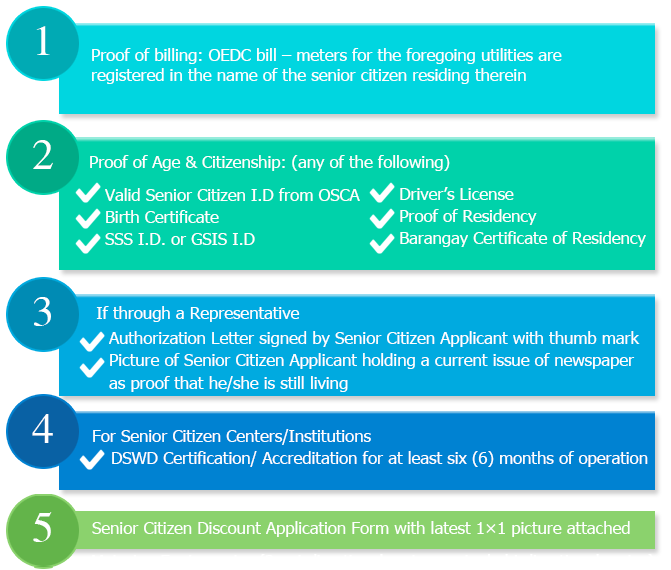
Article 12. Utility Discounts — “Section 1. Five (5%) Discount – The grant of a minimum of five percent (5%) discount relative to the monthly utilization of water and electricity by households with senior citizens; Provided, That the individual meters for the foregoing utilities are registered in the name of the senior citizen residing therein: provided, further, that the monthly consumption does not exceed one hundred kilowatt hours (100 kWh) of electricity and thirty cubic meters (30m³) of water: Provided, furthermore, that the privilege is granted per household regardless of the number of senior citizens residing therein.”
To avail of the discount under this Section, the senior citizen shall submit the required requirements at OEDC Customer Services.
Consumer Services
Understanding your Bill
Your monthly bill shows your consumption (kWh), applicable rates, taxes, and other charges. Key items to review:
- Account details — name, address, meter number, contract number
- Previous and present reading — consumption for the billing period
- Bill due date — pay not later than nine (9) days after receipt of the monthly bill (Magna Carta Article 32)
- Generation, transmission, distribution charges and applicable subsidies
- Taxes and other fees as mandated
Need help reading your bill? Visit any OEDC office or call (047) 222-9410 for clarification on any charge.
Legal & Safety
Pilferage / Theft
R.A. No. 7832 — Anti-Pilferage of Electricity and Theft of Electricity Transmission Lines/Materials Act of 1994
I. Illegal Use of Electricity and Theft of Electric Power Transmission Lines and Materials — It is unlawful for any person, natural or juridical, public or private entity to use electricity illegally. (Section 2. Illegal Use of Electricity)
Section 2 — Illegal Use of Electricity
It is hereby declared unlawful for any person, whether natural or juridical, public or private, to:
(a) Tap, make or cause to be made any connection with overhead lines, service drops, or other electric service wires, without previous authority or consent of the private electric utility or rural electric cooperative concerned;
(b) Tap, make or cause to be made any connection to the existing electric service facilities of any duly registered consumer without the latter’s or the electric utility’s consent or authority;
(c) Tamper, install or use a tampered electrical meter, jumper, current reversing transformer, shorting or shunting wire, loop connection or any other device which interferes with the proper or accurate registry or metering of electric current or otherwise results in its diversion in a manner whereby electricity is stolen or wasted;
(d) Damage or destroy an electric meter, equipment, wire or conduit or allow any of them to be so damaged or destroyed as to interfere with the proper or accurate metering of electric current; and
(e) Knowingly use or receive the direct benefit of electric service obtained through any of the acts mentioned in subsections (a), (b), (c), and (d) above.
Section 3 — Theft of Electric Power Transmission Lines and Materials
It is hereby declared unlawful for any reason to: (1) Cut, saw, slice, separate, split, sever, smelt, or remove any electric power transmission line/material or meter… without the consent of the owner; (2) Take, carry away or remove or transfer… any electric power transmission line/material or meter…; (3) Store, possess or otherwise keep in his premises, custody or control, any electrical power transmission line/material or meter without the consent of the owner…; and (4) Load, carry, ship or move from one place to another… without first securing a clearance/permit… from its owner or the National Power Corporation (NPC)…
“Electrical power transmission line/material” refers to electric power transmission steel towers, wood poles, cables, wires, insulators, line hardwares, electrical conductors and other related items with a minimum voltage of sixty-nine kilovolts (69 kV).
Section 4 — Prima Facie Evidence
The presence of any of the following circumstances shall constitute prima facie evidence of illegal use of electricity: (i) bored hole on the glass cover of the electric meter; (ii) salt, sugar and other elements inside the meter; (iii) wiring connection affecting normal operation/registration of the meter; (iv) tampered, broken, or fake seal on the meter; (v) current reversing transformer, jumper, shorting and/or shunting wire, and/or loop connection; (vi) mutilation, alteration, reconnection, disconnection, bypassing or tampering of instruments; (vii) destruction of any integral accessory of the metering device box; and (viii) acceptance of money… for not reporting such circumstances — Provided, That discovery must be personally witnessed and attested to by an officer of the law or duly authorized representative of the Energy Regulatory Board (ERB).
Sections 6–7 — Disconnection, Penalties, Differential Billing
Section 6. Disconnection of Electric Service — The distribution utility has the right to disconnect electricity provided the requisites provided by law are present.
Section 7. Penalties — Offenders found by final sentence in violation of Section I and Section II would be subject to the penalties imposed by law.
Differential Billing — the amount to be charged to the person concerned for the unbilled electricity illegally consumed as determined through the methodologies outlined in the Act.
Danger of Pilferage / Theft
Danger to People
Electricity theft creates situations where more power flows through the lines than is expected, creating power surges and system failures. Illegal connections to power lines are never safe, as they have not been installed by professionals. They are considered dangerous to anyone who may come into contact with them.
Danger to Property
Power surges due to electricity theft can damage the wiring in your home and can lead to electrical fires. The overloads can also harm your electrical equipment and appliances. Theft creates a greater possibility of fires and even explosions.
Danger to Electrical System
High loads that occur with electricity theft cause power surges and electrical system failures — meaning outages in your neighborhood.
Policies
Collection Policy & Disconnection Policy
Monthly Billing Payment and Disconnection Policies
Article 5. Basic Obligation of Consumers — Every consumer must comply with the following obligations and responsibilities:
- (a) To observe the terms of his contract including, among other things, paying monthly electricity bills promptly and honestly;
- (b) To allow the faithful and accurate recording of consumption to be reflected in the appropriate device;
- (c) To allow the utility’s employees/representatives entry/access to his premises for the purposes provided for in Article 29;
- (d) To take proper care of metering or other equipment that the electric utility has installed in his premises;
- (e) To inform the distribution utility and/or proper authorities of any theft or pilferage of electricity or any damage caused by any person to the electric meter and equipment; and
- (f) To cooperate with and support programs on the wise and efficient use of electricity.
Article 18. Right to Due Process Prior to Disconnection
No consumer shall be deprived of electric service without due process of law. Disconnection of electric service shall only be made under the following circumstances:
- (a) Non-payment of electric bills within the period of time provided in Article 32
- (b) Illegal use of electricity under Republic Act No. 7832 (Anti-Electricity Pilferage Law)
- (c) Upon lawful orders of government agencies and/or the courts
- (d) When the public safety so requires
- (e) Request of the registered customers based on justifiable reasons
- (f) Allowing other end-users or persons to be connected to his electrical installation, whether for profit or not
Article 19. Right to a Notice Prior to Disconnection
For disconnections due to non-payment of electric bills, a written notice must have been served to the customer forty-eight (48) hours before such disconnection. The distribution utility may discontinue the service notwithstanding the existence of the customer’s bill deposit.
When the owner/occupant has been caught in flagrante delicto doing any of the acts enumerated in Section 6 of RA 7832, the distribution utility shall have the authority and right to disconnect immediately after serving the written notice or warning indicating the name and address of the consumer, consumer account number, date of apprehension, findings of fact, amount of energy pilfered, differential billing amount and method used in computing it.
Article 32. Obligation to Pay Monthly Electric Bills — Consumers must pay their bills not later than nine (9) days after receipt of the monthly bill.
Disconnection Procedure
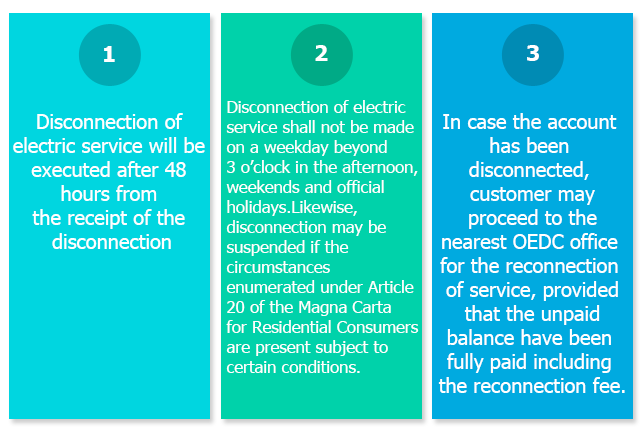
- Issuance of Disconnection Notice — Under Article 19, a disconnection notice due to unpaid electric bills is served to the customer 48 hours before such disconnection.
- Customers who have received a Disconnection Notice should report to OEDC Payment Office to settle their bill immediately to avoid disconnection of service.
- Customers who received a Disconnection Notice should only pay at the nearest OEDC Payment Office.
- kWh Meter Disconnection — Disconnection of electric service is only made under the circumstances enumerated in Article 18 of the Magna Carta for Residential Consumers.
CCD Clearance for New Connection
CCD Clearance is a part of the application process for new connection applicants. Its purpose is to screen the applicants and to check if they have unsettled obligation or existing disconnected account within the vicinity being applied for. Customers applying for new connection and who were found to have disconnected account should settle first the unpaid account before he can get a CCD Clearance.
Tools
Appliance Calculator
Selected Appliances (0)
- No appliances selected yet.
Monthly estimate assumes 30 days of use. Actual billed amount depends on your meter reading, generation charge for the month and other government-mandated adjustments.
Payments
Payment Centers
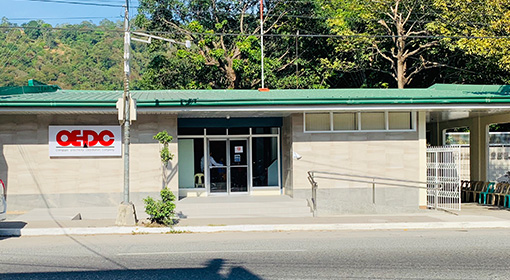
OEDC Offices
Office hours schedule for both offices:
Monday – Thursday: 8:30 AM – 4:00 PM
Friday: 8:30 AM – 3:00 PM
OEDC Collecting Partners
Save & Stay Safe
Tipid & Safety Tips
Home Safety
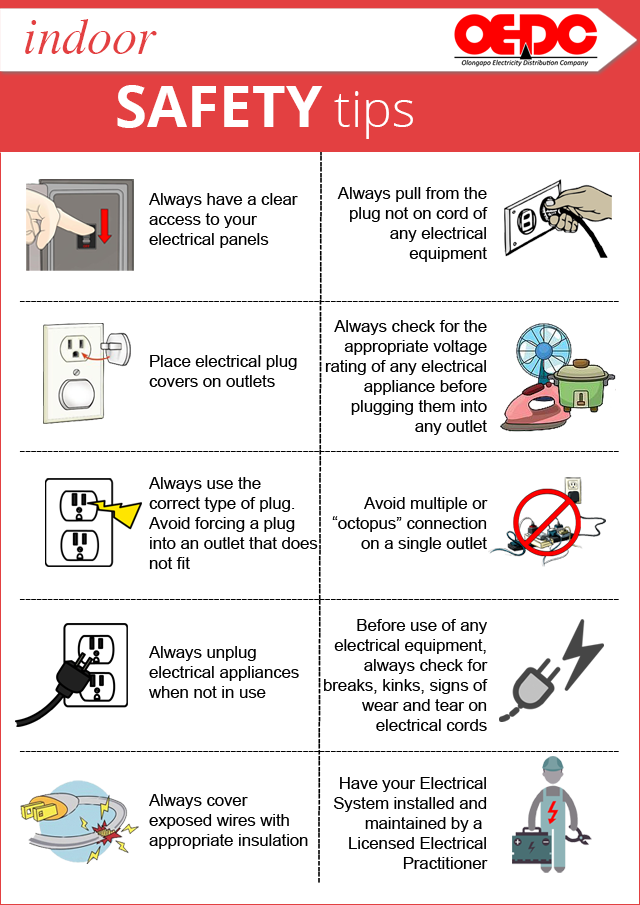
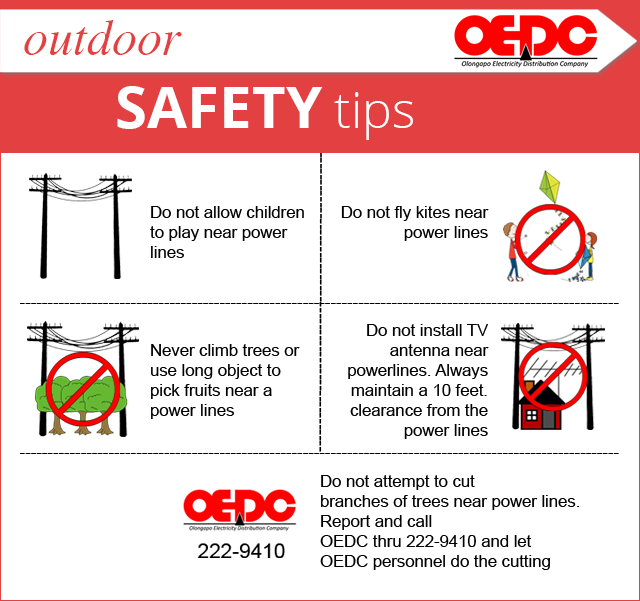
Keep electrical appliances dry and away from water. Use correctly rated fuses and circuit breakers. Do not overload outlets. Have wiring inspected regularly by a licensed electrician.
Typhoon Safety
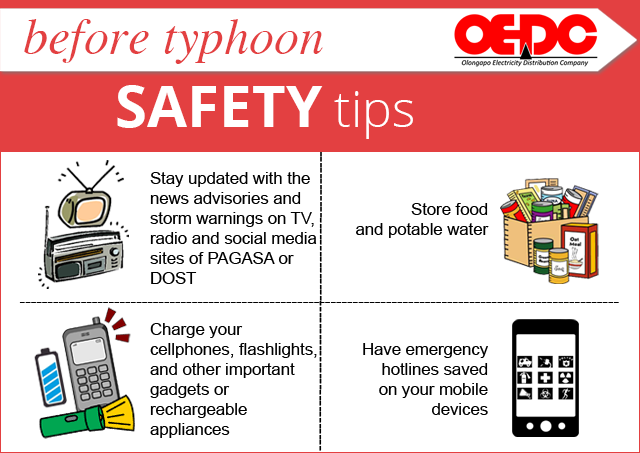
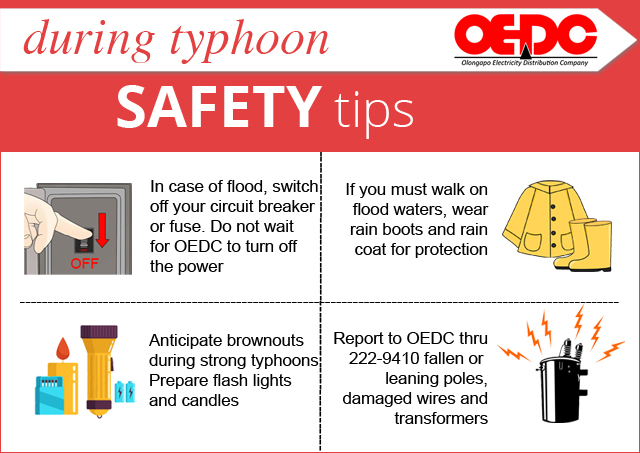
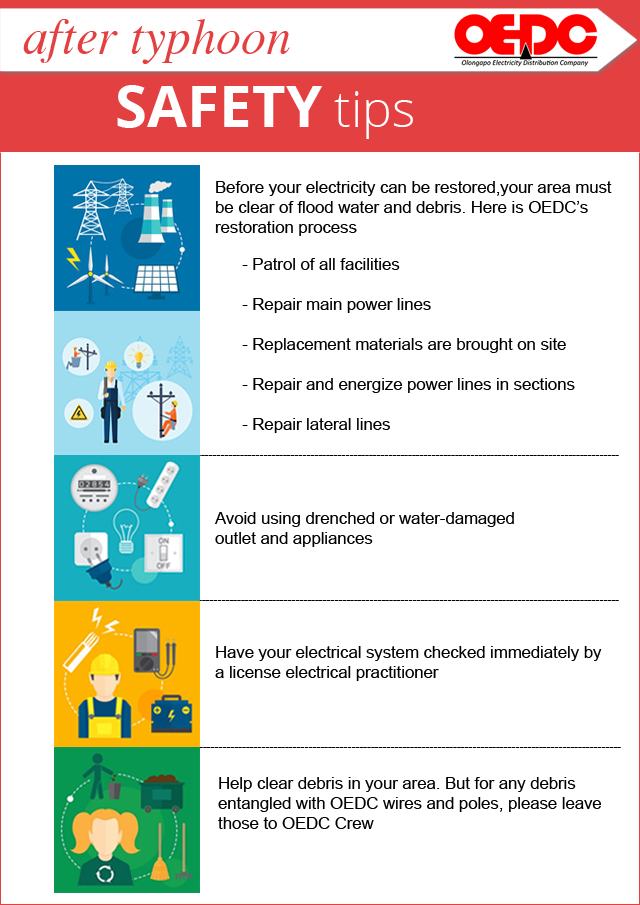
- Before: Trim branches near lines, secure outdoor items, check roofing and gutters
- During: Stay away from downed lines, turn off appliances if flooding is imminent
- After: Report damaged lines immediately — never touch fallen wires
Construction Safety
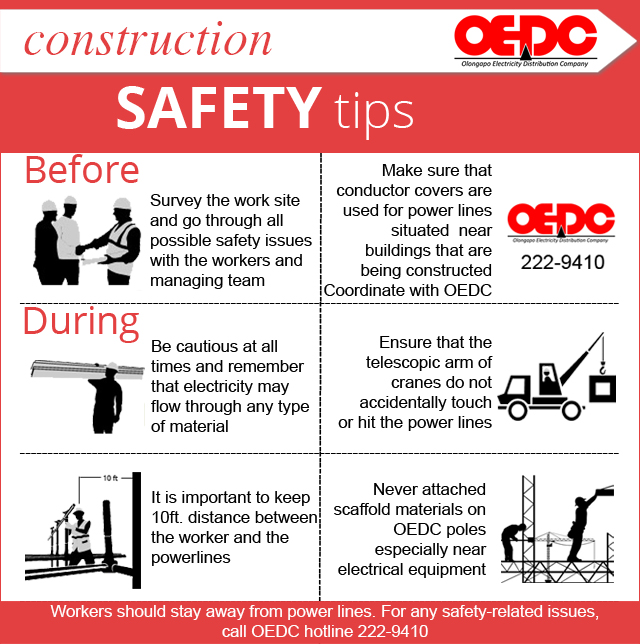
Always coordinate with OEDC before building near electric lines. Maintain safe clearance from high-voltage facilities. Use licensed electrical practitioners for all installations.
Fire Safety
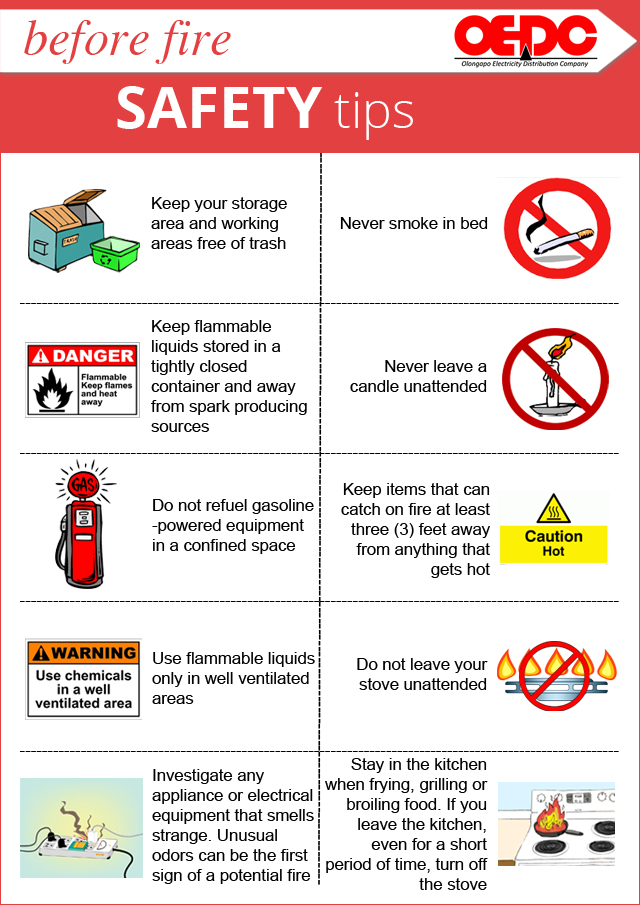
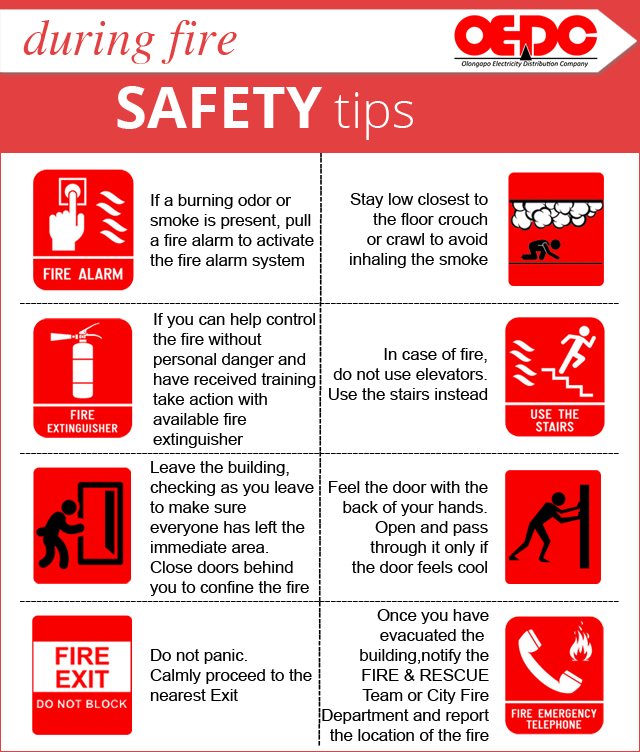
- Do not overload outlets or extension cords
- Turn off unused appliances
- Keep flammable materials away from electrical equipment
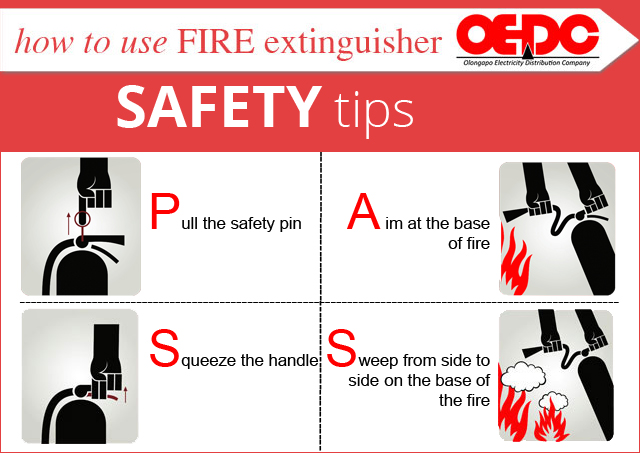
- Know how to use a fire extinguisher (PASS: Pull, Aim, Squeeze, Sweep)
Earthquake Safety
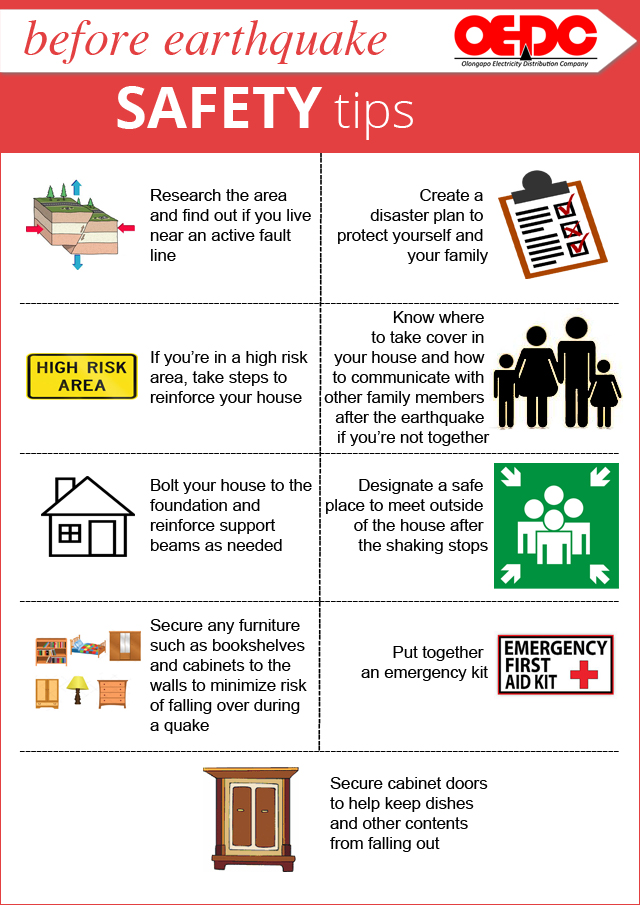
- Before: Secure heavy appliances and know where your main breaker is
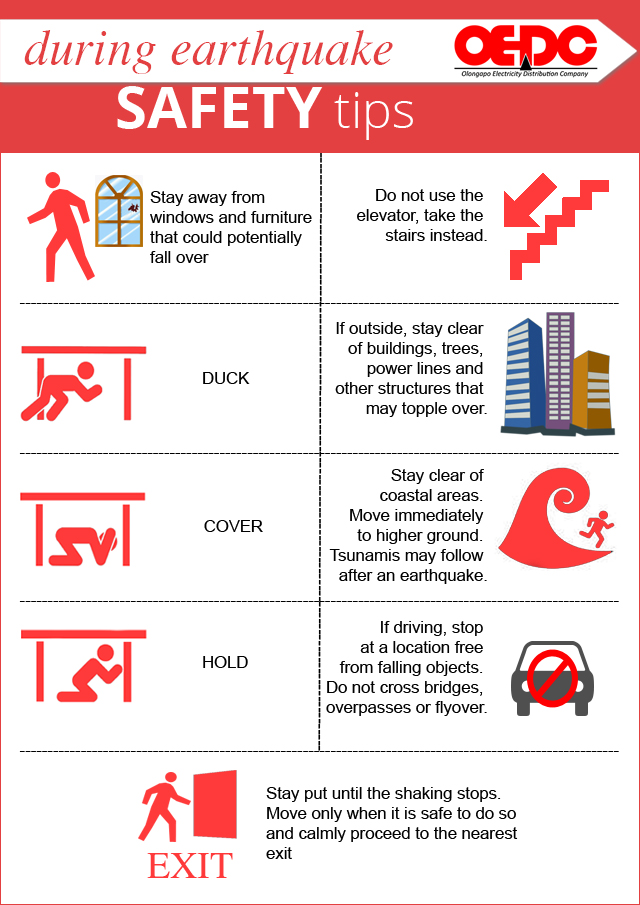
- During: Drop, Cover, and Hold On — stay away from power lines and panels
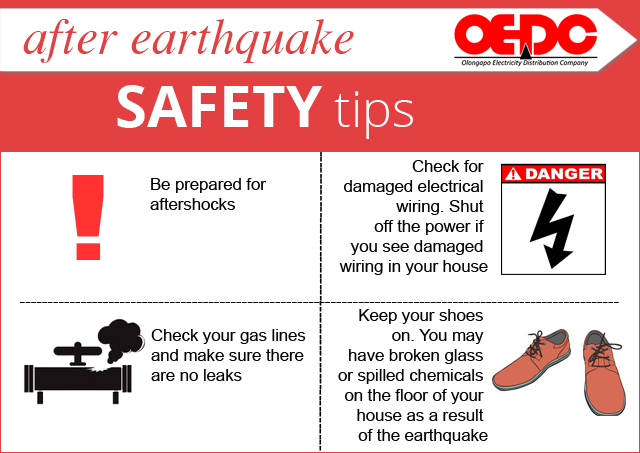
- After: Check for damaged wiring before restoring power; report hazards to OEDC
Tipid Kuryente Tips
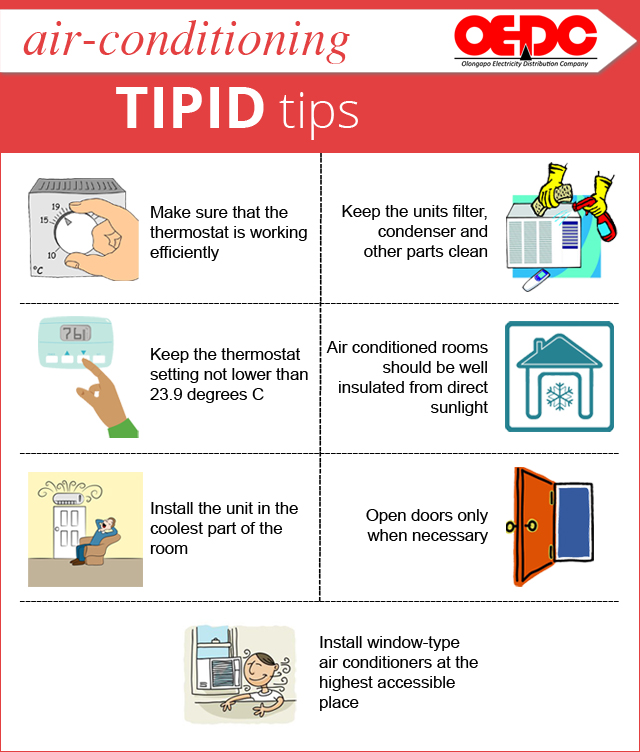
- Set aircon to 25–27°C and clean filters regularly
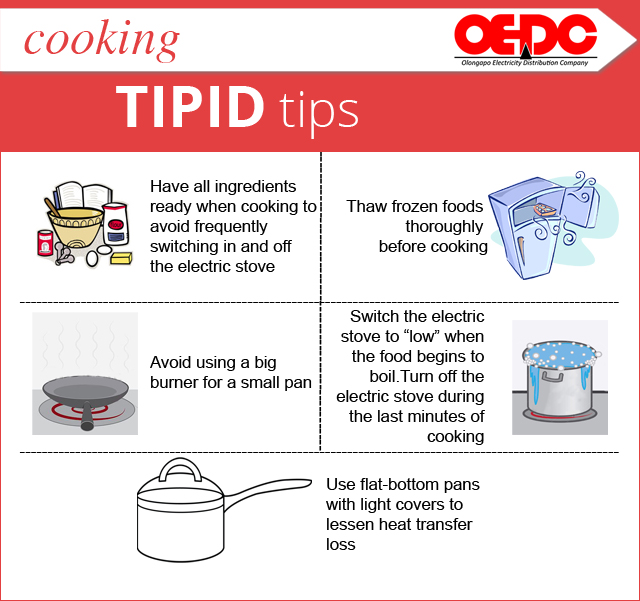
- Cook with lids on — reduces energy used
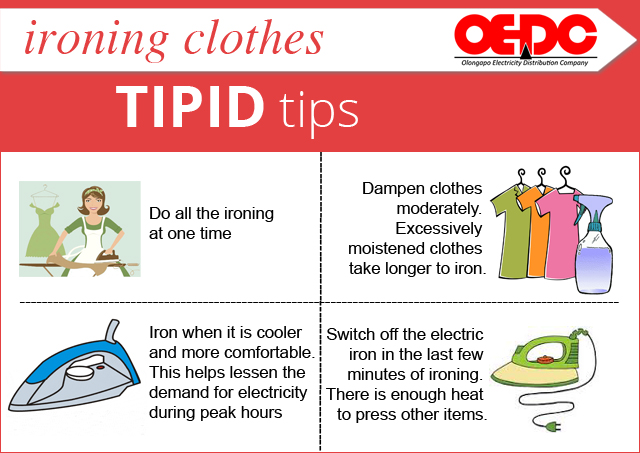
- Iron full loads and use residual heat
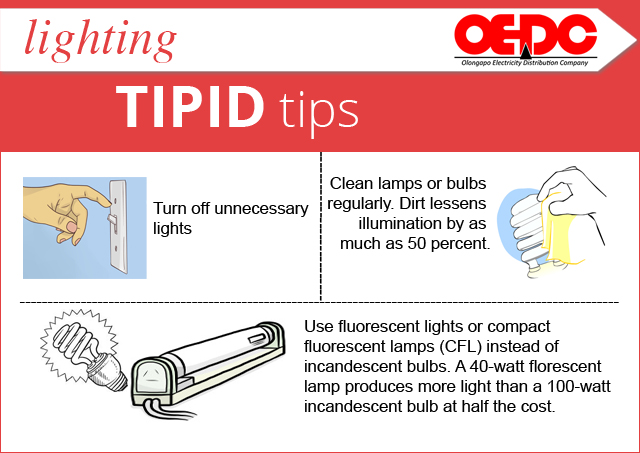
- Switch to CFL or LED bulbs; turn off lights when not in use
- Unplug chargers and appliances on standby
- Use the Appliance Calculator to estimate consumption